
Cybersecurity is no longer just an IT issue. As organisations become increasingly reliant on cloud services, remote work environments and AI-powered tools, the way businesses approach security must continue to evolve.
While the threat landscape changes rapidly, there are several foundational areas that organisations should regularly review.
Protect the Identity
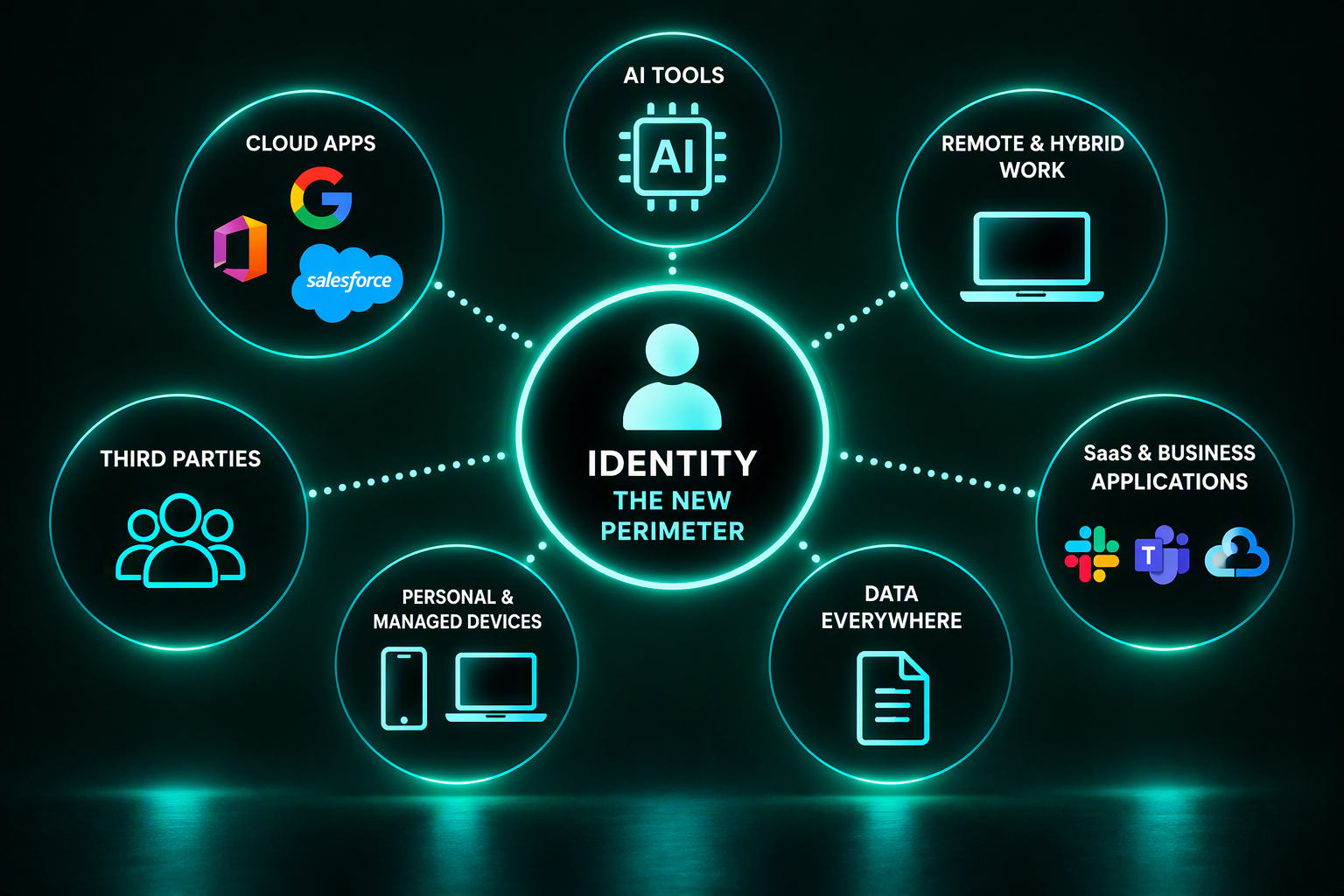
Historically, cybersecurity strategies focused on protecting networks, servers and firewalls. However, modern businesses operate far differently than they did a decade ago.
With users accessing applications from multiple locations and devices, identity has become the new security perimeter. Protecting user accounts and enforcing strong authentication controls is now one of the most important aspects of a modern security strategy.
Implement Passkeys
Passwords remain one of the most commonly exploited methods of attack.
Passkeys provide a phishing-resistant authentication method that helps reduce the risk of credential theft and other identity-based attacks. As organisations continue strengthening their security posture, moving away from traditional passwords and weaker forms of MFA, towards phishing-resistant authentication should be a priority.
Monitor Systems Around the Clock
Cyber threats can emerge at any time, making visibility critical.
Continuous monitoring across endpoints and Microsoft 365 environments helps organisations identify unusual activity, respond faster and reduce the potential impact of a security incident.
Without ongoing monitoring, threats can go undetected for extended periods.
Understand Where Data Resides
Many organisations struggle to maintain visibility over where data is stored and how it is being accessed.
This challenge has become even greater with the rapid adoption of cloud platforms, software-as-a-service applications and AI tools.
Businesses should regularly review what systems are being used, where sensitive information resides and whether appropriate security controls are in place. Written policies are important, but visibility and governance are equally critical.
Train and Test Your Staff
Even the strongest technical controls can be undermined by human error.
Employees remain one of the most important lines of defence against cyber threats. Ongoing training, awareness programs and phishing simulations can help staff identify suspicious activity and respond appropriately when issues arise.
A strong cybersecurity culture starts with informed and engaged employees.
Cybersecurity is not a single product or project. It is an ongoing process that requires organisations to continually assess and strengthen their approach across people, processes and technology.
By focusing on identity protection, modern authentication methods, continuous monitoring, data visibility and staff awareness, businesses can take meaningful steps towards reducing cyber risk and improving resilience.
Orlo One works with organisations to develop strategic and proactive approaches to technology, helping align systems, security and digital investments with broader business objectives. By focusing on long-term planning rather than reactive decision-making, organisations can better manage risk, improve efficiency and position themselves for future growth.